The question isn’t whether or not humans matter — it’s how will we make our impact count? #TEDTalks
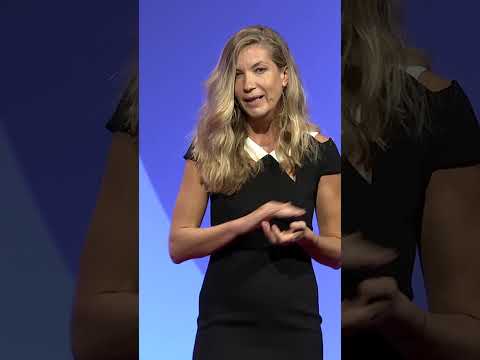
Summary
The speaker challenges three myths about AI adoption that hinder progress: the belief that AI disruption is overblown and humans will naturally adapt (despite exponential tech growth vs. linear human growth), the assumption that soft skills like empathy and creativity are uniquely human (when AI increasingly demonstrates these capabilities), and the focus on protecting existing jobs rather than developing human potential. The key argument is that while AI advancement is inevitable, how quickly we prepare for and adapt to it remains within our control, requiring immediate action rather than complacency.
Key takeaways
- Start preparing for AI integration now—only 13% of companies have embedded agents, but tech adoption follows exponential curves while human adaptation is linear
- Stop assuming soft skills guarantee job security; focus instead on defining what humans should optimally do in an AI-augmented world
- Invest in human potential and adaptability rather than attempting to preserve static job roles
- Recognize that time is critical—past technological transitions had generations to adapt, but AI moves too quickly for that luxury
Key moments
0:00Introduction: AI advancement is inevitable; preparation speed is our choice0:13Myth 1: Society will adapt naturally like with electricity and the internet0:54Myth 2: Soft skills like empathy and creativity are uniquely human1:34Myth 3: Focus should be on protecting jobs rather than developing human potentialSummarize your own video
Paste any YouTube link. Key points, takeaways, and timestamps in seconds.
Free. 3 summaries a day. No account needed.Generated by YepIts.ai from the video's captions. Summaries can miss nuance — watch the key moments for anything that matters.